Quick answer
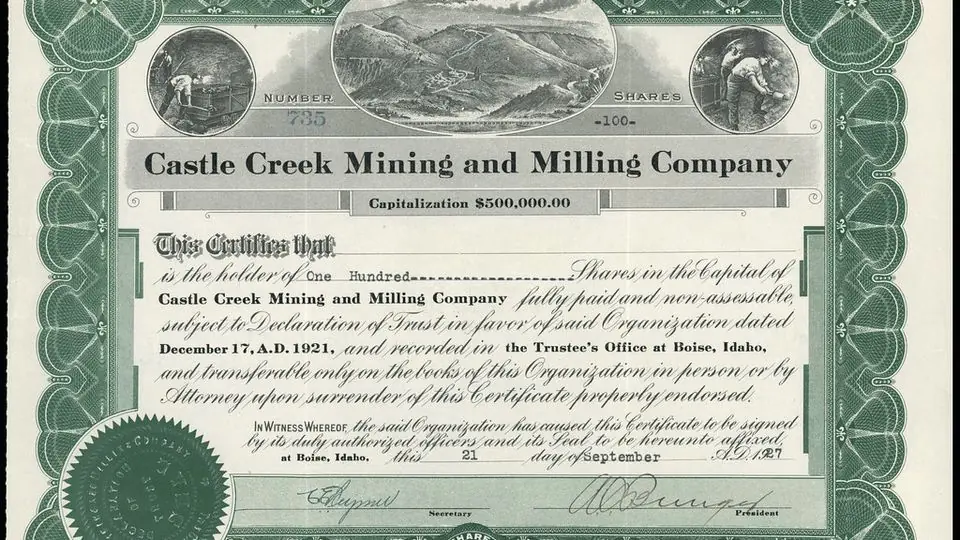
A stock (or share) is a unit of ownership in a company. Shareholders can gain if the price rises or the company pays dividends, and common shareholders usually get a vote — but prices also fall, and you can lose money [1].
Key points
- A share is a slice of ownership, not a loan to the company.
- Returns come from price changes and, for some companies, dividends.
- Common stock usually carries voting rights; preferred stock usually trades votes for dividend priority.
- Public companies must file regular reports you can read for free on the SEC's EDGAR system.
- Stock prices move down as well as up — there is no guaranteed outcome.
#What does owning a stock actually mean?
When you buy a share, you buy a small piece of a company. Investor.gov, the U.S. Securities and Exchange Commission's education site, describes stocks as "a type of security that gives stockholders a share of ownership in a company" [1]. That ownership is proportional: the more shares you hold relative to the total number the company has issued, the bigger your slice.
Ownership is different from lending. A bond holder lends money and expects it back with interest (see what a bond is). A shareholder is not promised anything back; their fortunes rise and fall with the business.
Worked example
How big is your slice?
Imagine a company with 50,000,000 shares outstanding. You buy 200 shares at $40 each.
- Amount invested (200 × $40)
- $8,000
- Your share of the company (200 ÷ 50,000,000)
- 0.0004%
- Price rises to $46: gain (200 × $6)
- +$1,200 (+15%)
- Price falls to $30: loss (200 × −$10)
- −$2,000 (−25%)
The same holding can gain or lose value — the size of the move depends entirely on the share price, which you do not control.
Hypothetical numbers for illustration, calculated before any trading costs or taxes.
#Why do companies sell shares?
Selling shares lets a company raise money without borrowing it. Investor.gov lists purposes such as paying off debt, launching new products, expanding into new markets or regions, and building or enlarging facilities [1]. The first sale of shares to the general public is usually an initial public offering, or IPO [2].
How a share usually reaches you
#How can shareholders make or lose money?
Investor.gov describes three main benefits of owning stock: capital appreciation when the price rises, dividend payments when the company distributes some of its earnings, and the ability to vote your shares [1]. Dividends are optional for the company; many firms pay none. Read how dividends work for the dates and mechanics.
The other side is real. Investor.gov warns that "Stock prices move down as well as up" and that there is no guarantee the company will do well, so you can lose money [1]. If a company is liquidated, common stockholders are paid last, after creditors and preferred holders [1].
| Source | What it is | Guaranteed? |
|---|---|---|
| Price change | The difference between what you paid and what you sell for | No — prices can fall below what you paid |
| Dividends | Cash (or extra shares) the company chooses to distribute | No — companies can cut or stop them |
| Voting | A say on board elections and major proposals (mostly common stock) | Not a cash return; rights vary by share class |
#What is the difference between common and preferred stock?
Most shares people buy are common stock. According to Investor.gov, common stock entitles owners to vote at shareholder meetings and receive dividends, while preferred stockholders usually do not vote but receive dividends before common stockholders [1]. The full comparison is in common vs preferred stock.
#Where can you see what a company reports?
Public companies disclose business and financial information regularly. The annual Form 10-K includes audited financial statements, and the Form 10-Q covers each of the first three quarters with unaudited statements [2]. The SEC publishes these filings free of charge on its EDGAR website [2]. Our guide to reading financial statements walks through what to look at first.
#How do people buy shares?
Investor.gov lists several routes: a direct stock plan, a dividend reinvestment plan, a discount or full-service broker, or a stock fund [1]. Brokers charge for their services, and a fund holds many stocks at once — see what a mutual fund is. Before opening an account, check the broker's registration.
Common beginner mistakes
Treating a share like a savings account
A share has no fixed value and no promise of repayment. Money you may need soon is usually kept in cash-like accounts, not in stocks.
Owning just one or two companies
If a single company struggles, a concentrated holding falls with it. Spreading money across many companies is the idea behind diversification.
Confusing a low share price with a cheap company
A $5 share is not cheaper than a $500 share in any meaningful sense; what matters is the price relative to what the business earns. See the P/E ratio.
What's the bottom line?
A stock is part-ownership of a business: you share in its growth through price changes and any dividends, and in its setbacks through falling prices. Knowing what a share does and does not promise is the foundation for everything else on this site — next, see how the stock market works.
Frequently asked questions
Is a stock the same as a share?
In everyday use, yes. "Stock" often refers to ownership in general and "share" to a single unit of it, but both describe ownership in a company.
Can a stock go to zero?
Yes. If a company fails, its shares can lose all their value, and common stockholders are last in line if the company is liquidated.
Do all stocks pay dividends?
No. Dividends are a choice made by the company's board. Many companies, especially young or fast-growing ones, pay none and reinvest their earnings instead.
Do I need a lot of money to buy stocks?
Not necessarily. Some brokers let you buy fractions of a share, and funds let you own many stocks with a single purchase. Fees and minimums differ, so compare them before you start.
Sources
Grade A = primary source (regulator, government agency, official rulebook or the index provider's own documents). Numbers in brackets in the text point here.
- U.S. SEC — Investor.gov. Stocks (2026). Accessed 2026-10-03.A
- U.S. SEC — Investor.gov. Public Companies (2026). Accessed 2026-10-03.A
This page is general education, not personal financial, tax or legal advice. Figures in worked examples are hypothetical and calculated before taxes and fees unless stated. Rules and limits change; check the linked primary sources for the current version. How we check every page.