Quick answer
Companies first sell shares to investors in the primary market, often through an IPO. After that, investors trade existing shares with each other in the secondary market. Your broker routes each order to an exchange, a market maker or another venue to be matched [1] [2].
Key points
- The primary market is where a company sells new shares; the secondary market is where investors trade existing ones.
- You trade through a broker-dealer, which routes your order to an exchange, a market maker or another venue.
- The bid is the most a buyer will pay; the ask is the least a seller will accept. The gap is the spread.
- A market order fills quickly but not at a guaranteed price; a limit order sets a price but may not fill.
- In the US, most stock trades settle one business day after the trade (T+1) since May 28, 2024.
#What is the difference between the primary and secondary market?
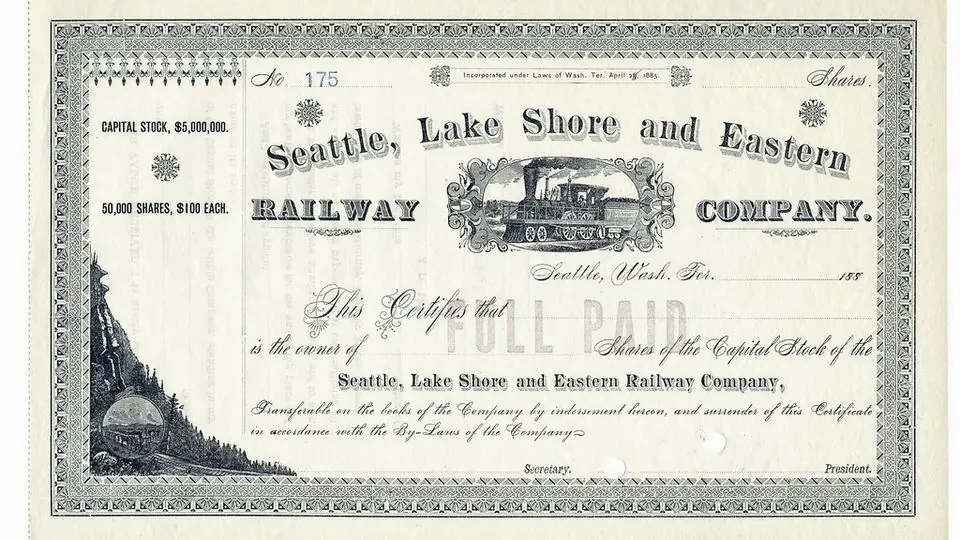
A company raises money by selling new shares. The first time it offers shares to the general public is called an initial public offering, or IPO [3]. This first sale is often called the primary market: money flows from investors to the company. Investment banks called underwriters manage and sell the IPO for the company and recommend an offering price [3].
Once the shares exist, they change hands between investors. Investor.gov defines the secondary market as "Markets where existing securities are bought and sold" [1]. When you buy a share of a well-known company today, you are almost always buying in the secondary market. The company does not receive your money; the investor who sold to you does.
Individual investors often cannot buy at the IPO price. According to the SEC's IPO bulletin, underwriters distribute most IPO shares to institutional and high net-worth clients such as mutual funds, pension funds and insurance companies [3]. The same bulletin warns that the offering price may bear little relationship to the trading price once shares begin to trade [3].
Primary vs secondary market
Primary market
- New shares are created and sold
- Money goes to the company
- Usually an IPO or a later offering
- Underwriters manage the sale
- Most shares go to large institutions
Secondary market
- Existing shares change hands
- Money goes to the selling investor
- Happens every trading day
- Brokers route your order
- Where most individuals buy and sell
#Who are the main players in the stock market?
Several kinds of firms keep trading running. Each has a defined role, and most are overseen by the SEC or a self-regulatory organization such as FINRA [4].
| Participant | What it does | Why it matters to you |
|---|---|---|
| Broker-dealer | Handles trades between buyers and sellers for a fee; may also buy from or sell to customers from its own inventory | Your account is held here and your orders go through it |
| Securities exchange | A market where securities are bought and sold, registered as a national securities exchange | Lists shares and matches orders |
| Alternative trading system (ATS) | A trading system that meets the definition of an exchange but operates under an exemption as a broker-dealer | Another place your order may be filled |
| Clearing agency | Compares trades, clears them and prepares instructions for settlement; depositories hold securities for participants | Makes sure the shares and cash actually move |
| Self-regulatory organization (SRO) | Writes and enforces rules for its members, for example FINRA | Sets conduct rules brokers must follow |
| Transfer agent | Records changes of ownership, keeps the shareholder list and distributes dividends | Keeps the official record of who owns what |
#What happens after you click buy?
Your broker decides where to send your order. Investor.gov describes several routes: the broker may send it to an exchange, to a market maker (a firm that stands ready to buy or sell a stock at publicly quoted prices), to an electronic communications network that automatically matches buy and sell orders at set prices, or fill it from its own inventory, which is called internalization [2].
Some market makers pay brokers to send them orders, a practice called payment for order flow [2]. Whatever the route, brokers have a duty to seek the best execution reasonably available for customer orders [2]. Once the trade is done, it still has to settle: the shares move to the buyer and the cash to the seller. Since May 28, 2024, most US securities trades settle one business day after the trade date, known as T+1 [5].
The life of a stock order
You place the order
You choose the stock, the number of shares and the order type (for example market or limit) in your brokerage account.
Your broker routes it
The order goes to an exchange, a market maker, an electronic network, or is filled from the broker's own inventory.
The order is matched
Your buy is paired with someone else's sell at a price both sides accept.
The trade settles
Under T+1, a trade on Monday usually settles on Tuesday: shares land in the buyer's account and cash in the seller's.
#What are the bid, the ask and the spread?
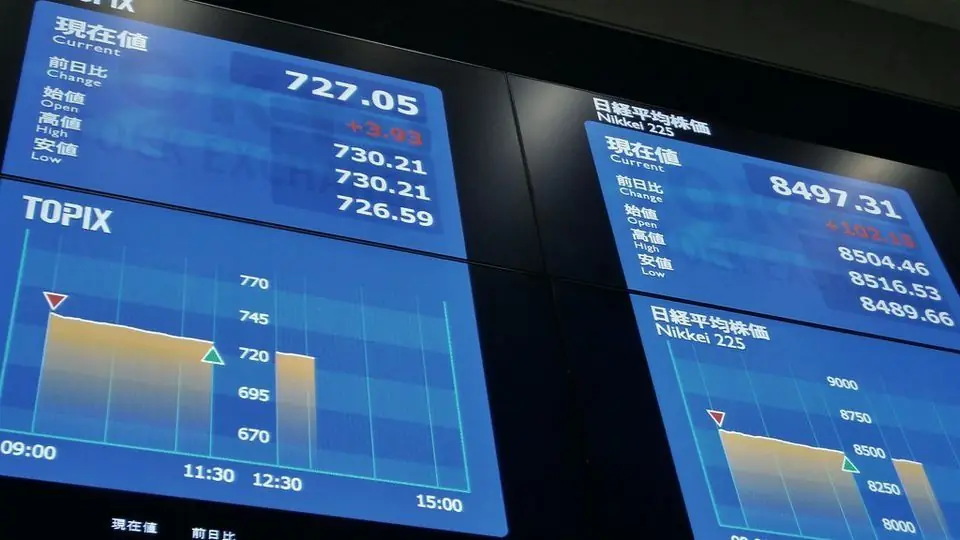
Every quoted stock has two prices at any moment. The bid is the highest price a buyer will pay; the ask (or offer) is the lowest price a seller will accept. Investor.gov notes the bid is almost always lower than the ask, and the difference is called the spread [6]. If you buy at the ask and sell at the bid straight away, you lose the spread. That gap is a real trading cost, even when a broker charges no commission. For more on the term, see the bid-ask spread entry.
Worked example
What the spread costs on 100 shares
Two hypothetical stocks. You buy 100 shares at the ask and, to see the cost of the spread, imagine selling them back at the bid a moment later with no price change.
- Stock A: bid $50.00, ask $50.04 — spread
- $0.04
- Stock A: buy 100 at the ask (100 × $50.04)
- $5,004.00
- Stock A: sell 100 at the bid (100 × $50.00)
- $5,000.00
- Stock A: cost of the spread ($0.04 × 100)
- $4.00 (0.08% of the purchase)
- Stock B: bid $2.00, ask $2.10 — spread
- $0.10
- Stock B: cost of the spread ($0.10 × 100) on a $210 purchase
- $10.00 (4.76% of the purchase)
A spread that looks tiny in cents can be a large percentage on a low-priced or thinly traded stock.
Hypothetical prices for illustration. Real spreads change through the day and differ by stock.
#Should you use a market order or a limit order?
The order type decides what you control: speed or price. A market order is an order to buy or sell immediately; it is expected to execute, but the price is not fixed in advance [7]. A limit order is an order to buy or sell at a specific price or better, so a buy limit only executes at the limit price or lower [7]. Investor.gov also warns that the last-traded price is not necessarily the price at which a market order will be executed [7]. Our guide to market vs limit orders covers the trade-offs in detail.
Common beginner mistakes
Thinking you buy shares from the company
After the IPO, your money goes to another investor, not the business. The company's cash does not change when its shares trade.
Ignoring the spread because trading is "commission-free"
No commission does not mean no cost. Buying at the ask and selling at the bid costs the spread every round trip.
Using market orders on thinly traded stocks
Stocks with few buyers and sellers often have wide spreads, so a market order can fill far from the last price. Check the bid and ask first.
Not checking who your broker is
Your broker holds your account and routes your orders. Before opening one, check the broker's registration.
What's the bottom line?
The stock market is a network of brokers, exchanges, market makers and clearing firms that lets investors trade existing shares with each other. Knowing who is on the other side, what the bid and ask mean, and how your order type affects the price helps you see the real cost of each trade. Next, read what a stock is if you skipped it, or see how indexes summarise the market in what a stock market index is.
Frequently asked questions
Does a company get money when I buy its stock?
Usually not. If you buy in the secondary market, the money goes to the investor who sold the shares. The company receives money only when it sells new shares, such as in an IPO or a later offering.
What does a market maker do?
A market maker is a firm that stands ready to buy or sell a stock at publicly quoted prices [2]. Some market makers also pay brokers to send them customer orders, which is known as payment for order flow.
What does T+1 mean?
It means a trade settles one business day after the trade date. In the US this has applied to most securities trades since May 28, 2024 [5]. A sale on Monday usually settles on Tuesday.
Sources
Grade A = primary source (regulator, government agency, official rulebook or the index provider's own documents). Numbers in brackets in the text point here.
- U.S. SEC — Investor.gov. Secondary Market (glossary) (2026). Accessed 2026-10-03.A
- U.S. SEC — Investor.gov. Executing an Order (2026). Accessed 2026-10-03.A
- U.S. SEC — Investor.gov. Updated Investor Bulletin: Investing in an IPO (2026). Accessed 2026-10-03.A
- U.S. SEC — Investor.gov. Market Participants (2026). Accessed 2026-10-03.A
- U.S. SEC — Investor.gov. New "T+1" Settlement Cycle – What Investors Need To Know: Investor Bulletin (2024). Accessed 2026-10-03.A
- U.S. SEC — Investor.gov. Bid Price (glossary) (2026). Accessed 2026-10-03.A
- U.S. SEC — Investor.gov. Types of Orders (2026). Accessed 2026-10-03.A
- U.S. SEC — Investor.gov. Over-The-Counter (OTC) Securities (glossary) (2026). Accessed 2026-10-03.A
This page is general education, not personal financial, tax or legal advice. Figures in worked examples are hypothetical and calculated before taxes and fees unless stated. Rules and limits change; check the linked primary sources for the current version. How we check every page.