Quick answer
The coupon rate is the fixed interest set at issue. Current yield is the yearly coupon divided by today's price. Yield to maturity is the overall annual return if you buy at today's price, hold to maturity and every payment arrives on time [1].
Key points
- The coupon rate never changes; yields change whenever the bond's price changes.
- Current yield = annual coupon ÷ current market price.
- Yield to maturity also counts the gain or loss from buying below or above face value.
- Price and yield move in opposite directions.
- Every yield is an estimate that assumes the issuer pays in full and on time.
#Why does one bond have several 'yields'?
A bond's interest payments are fixed, but its price is not (see why bond prices fall when rates rise). So the return you get depends on what you pay. Each yield measure answers a slightly different question about that return. FINRA puts the core rule in one line: "Price and yield are inversely related: As the price of a bond goes up, its yield goes down, and vice versa" [1].
| Measure | Question it answers | Formula | Changes with price? |
|---|---|---|---|
| Coupon rate | How much interest does the bond pay per year, as a share of face value? | Annual coupon ÷ face value | No — fixed at issue |
| Current yield | How much interest do I get per year, relative to what I pay today? | Annual coupon ÷ current price | Yes |
| Yield to maturity (YTM) | What is my overall annual return if I hold to maturity? | The rate that makes all future payments, discounted, equal today's price | Yes |
#What is the coupon rate?
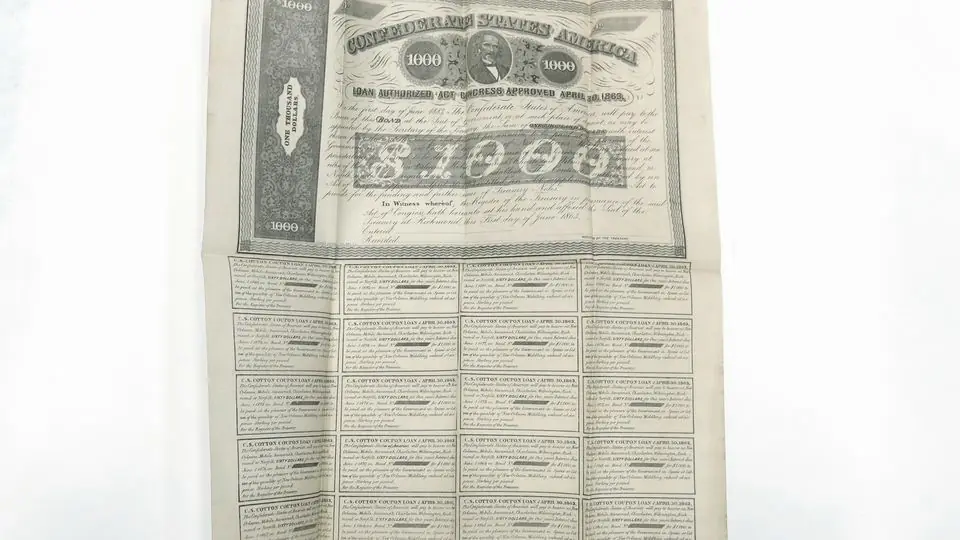
FINRA defines the coupon rate as "the annual interest rate established when the bond is issued that does not change during the lifespan of the bond" [1]. It is always applied to face value, not to the price you paid. A $1,000 bond with a 5% coupon pays $50 a year — usually $25 every six months — whether you bought it for $950 or $1,050. The coupon tells you the size of the payments, not your return. More on the building blocks in what a bond is.
#How do you calculate current yield?
Current yield is the yearly coupon divided by the bond's current market price [1]. FINRA's example: a $1,000 bond paying $45 a year has a 4.5% coupon yield; if its price rises to $1,030, the current yield falls to 4.37% [1]. We checked that in Python: $45 ÷ $1,030 = 4.369%, which rounds to 4.37%.
Current yield is easy to compute, but it ignores time. It does not count the gain you lock in by buying below face value, or the loss from paying above it. FINRA notes that coupon and current yield "only take you so far" in estimating the return a bond will deliver [1]. It works a bit like a dividend yield: a snapshot of income relative to price.
#What does yield to maturity add?
FINRA defines yield to maturity as "the overall interest rate earned by an investor who buys a bond at the market price and holds it until maturity" [1]. TreasuryDirect describes it simply as the annual rate of return on the security [2]. YTM combines three things: the coupons, the time until they arrive, and the difference between the price you pay and the face value you get back. Our glossary entry on yield to maturity has the formal definition.
Worked example
Worked example: one bond, three prices
A bond with a $1,000 face value, a 5% coupon ($25 every six months) and 5 years left to maturity. We calculate its current yield and YTM at three different purchase prices. YTM is solved in Python as the annual rate (two compounding periods a year) that makes the discounted payments equal the price.
- Price $950 (discount): current yield $50 ÷ $950
- 5.263%
- Price $950: yield to maturity
- 6.178%
- Price $1,000 (par): current yield and YTM
- 5.000% and 5.000%
- Price $1,050 (premium): current yield $50 ÷ $1,050
- 4.762%
- Price $1,050: yield to maturity
- 3.890%
At par, all three measures match. Below par, YTM is highest because you also gain $50 when the bond repays $1,000. Above par, YTM is lowest because you lose $50 by maturity.
Hypothetical bond, calculated in Python before taxes and trading costs, assuming every payment is made on time.
Same bond bought at $950: three different percentages
TreasuryDirect states the same pattern for Treasury notes and bonds: if the yield to maturity is greater than the interest rate, the price is less than par; if it is equal, the price is par; if it is less, the price is more than par [2]. Its own auction examples show a 20-year bond with a 1.750% interest rate sold at a 1.850% yield for a price of 98.336995 per $100 of face value — a yield above the coupon, so a price below par [2].
#What can make yield to maturity wrong?
YTM is an estimate. FINRA notes that it assumes coupon and principal payments are made on time, and that YTM computations generally assume coupons are reinvested at the same rate — which is "virtually impossible" because rates fluctuate, so YTM and yield to call "are estimates only" [1]. If the issuer defaults, the realized return can be far lower; that is credit risk.
Callable bonds add another twist. Yield to call is figured the same way as YTM but uses the call date and call price instead of maturity, and yield to worst is whichever of YTM and yield to call is lower [1]. In our example, if the $1,050 bond could be called at $1,000 in two years, its yield to call works out to 2.424% (calculated in Python) — well below its 3.890% YTM.
Common beginner mistakes
Reading the coupon as your return
The coupon is a percentage of face value. If you paid more or less than face value, your return is different.
Using current yield to compare bonds with different maturities
Current yield ignores the gain or loss that arrives at maturity. Two bonds with the same current yield can have very different YTMs.
Ignoring the call date
For a callable bond bought above par, the yield to call can be much lower than the YTM. Check the yield to worst.
Treating a high yield as free money
A yield far above similar bonds usually signals higher credit risk or another catch. Every yield assumes the issuer pays on time.
What's the bottom line?
The coupon rate tells you the size of the payments. Current yield relates those payments to today's price. Yield to maturity adds time and the gain or loss at maturity, which makes it the more complete — but still estimated — measure. When comparing bonds, look at YTM or yield to worst, then check the credit risk behind the number. To see where Treasury yields come from, read Treasury bills, notes and bonds.
Frequently asked questions
Is a higher yield always better?
Not by itself. A higher yield can reflect a lower price caused by higher credit risk, a longer maturity, or a call feature. Compare yields between bonds with similar risk and terms.
Why did my bond's yield go up when its price went down?
Because the payments stay the same. Paying less for the same payments means a higher return on the money paid — price and yield move in opposite directions.
What yield is shown on a bond fund?
A bond fund holds many bonds with different maturities, so the yield it shows is not the same thing as one bond's YTM. Check the fund's prospectus for how that yield is defined.
Is yield to maturity the return I will actually get?
Only if you hold to maturity, every payment arrives on time, and coupons can be reinvested at the same rate. FINRA calls YTM an estimate for that reason.
Sources
Grade A = primary source (regulator, government agency, official rulebook or the index provider's own documents). Numbers in brackets in the text point here.
- FINRA. Understanding Bond Yield and Return (2026). Accessed 2026-10-03.A
- U.S. Department of the Treasury — TreasuryDirect. Understanding Pricing and Interest Rates (2026). Accessed 2026-10-03.A
This page is general education, not personal financial, tax or legal advice. Figures in worked examples are hypothetical and calculated before taxes and fees unless stated. Rules and limits change; check the linked primary sources for the current version. How we check every page.