News analysis ·
Social Security earnings test 2027: working while claiming
The 2027 earnings test limits rise to $25,560 and $67,920. How the hold-back works, why it is not a lost benefit, and what to check.
Social Security will let early claimants earn more from a job in 2027 before part of their benefit is held back, according to a Kiplinger roundup of nine changes for the new year published on October 23. This article explains how the earnings test works, why withheld money is not simply gone, and the checks that help working retirees avoid an unpleasant surprise.
What changes in 2027
Kiplinger listed higher earnings test limits among the updates taking effect when the calendar turns. The earnings test is the rule that can shrink a monthly check when someone draws Social Security before full retirement age and still has wages coming in.
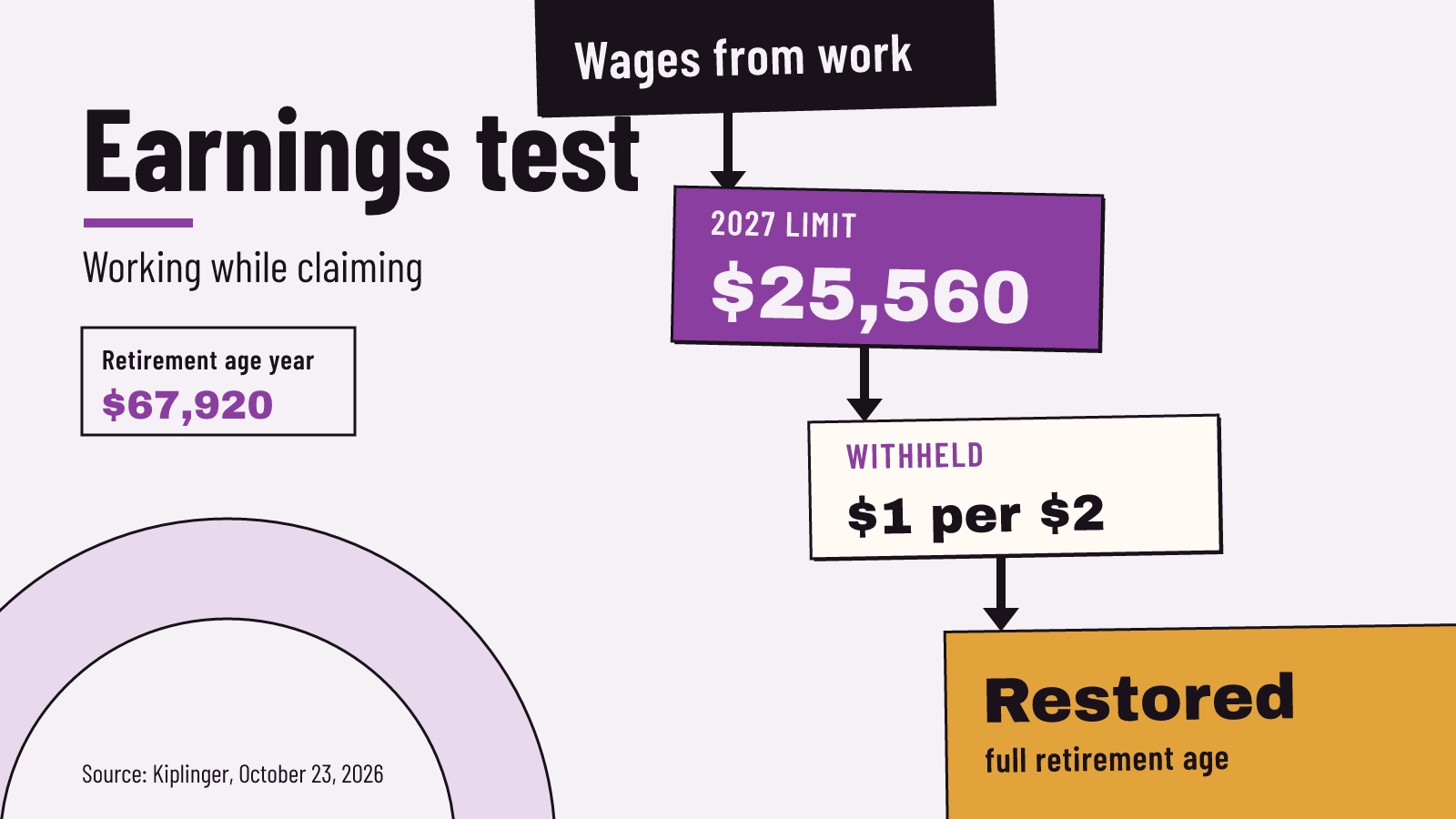
For people who stay under full retirement age for all of 2027, the annual limit is $25,560 (that works out to $2,130 monthly). The 2026 version stood at $24,480, the same as $2,040 per month. Above the limit, the Social Security Administration (SSA) holds back $1 for each $2 earned.
A gentler rule applies in the calendar year a worker reaches full retirement age. That threshold is $67,920 in 2027, up $2,760 from $65,160 in 2026, and the hold-back drops to $1 for every $3 over it. Only earnings before the month of full retirement age count toward it.
Withheld is not the same as lost
The word that matters in this rule is withheld. The earnings test does not fine a working retiree. It delays part of the payment. Kiplinger noted that once full retirement age arrives, there is no earnings cap for the rest of the year, and benefits that were held back are restored.
That changes how a saver should read a smaller check. The real risk is a cash-flow gap, not a permanent loss. Someone who planned a monthly budget around the full benefit, then kept a part-time job, may find several payments short at the very moment bills are due. People in that spot can feel pushed to sell investments at a bad time or dip into an emergency cushion.
Kiplinger also pointed out that the limits usually rise each year. A plan that fit last year's number may still work, but only if it is checked against the new one.
Credits and disability thresholds also move
Younger workers are affected too. One Social Security work credit in 2027 requires $1,970 of covered wages, up from $1,890. The yearly maximum of four credits requires $7,880, compared with $7,560 in 2026. Workers need 40 credits to qualify for retirement benefits. Kiplinger noted that credits beyond 40 do not raise the payment, which rests on a person's top 35 years of indexed earnings.
Disability recipients face a similar earnings line. For SSDI recipients who are not blind, the substantial gainful activity threshold, the monthly earnings level SSA uses to judge whether someone is working at a significant level, becomes $1,770 a month, from $1,690. For statutorily blind workers it is $2,950, up from $2,830. A trial work period month counts at $1,270, up from $1,210.
How to protect yourself
Savers do well to confirm any notice about their benefits at the source. Kiplinger reported that beneficiaries who want to read their 2027 cost-of-living notice online must set up a my Social Security account by November 18, 2026; otherwise SSA mails the notice in December. Account holders can choose email or text alerts that a new message is waiting in their account inbox. A few habits help:
- Compare your expected 2027 wages with the limit that fits your age group before you take extra hours, not after the checks shrink.
- Keep a simple month-by-month record of pay, especially in the year you reach full retirement age, since only earnings before that month count.
- Read official notices by signing in to your own account directly, rather than through a link in an unexpected email or text.
- Remember that the 2027 cost-of-living raise is 3.6%, but SSA takes the Medicare Part B premium out of most benefits, so the net increase on your statement can be smaller.
None of these steps requires a product or a paid service. They are about knowing which number applies to you and confirming information at the source.
What happens next
The new limits apply to 2027 earnings. The nearest date to note is November 18, 2026, for anyone who wants the cost-of-living notice delivered online instead of by mail. Because the earnings limits are adjusted each year, working beneficiaries should expect to revisit their plans again when the next set of figures is announced.
Sources
- Kiplinger, 23 Oct 2026
An AI model drafted this from the official notices and reports listed above. It was published automatically after software checks on figures and wording, without a human edit. It describes rules and protective habits; it is not personal financial advice.