News analysis ·
Social Security Clawbacks After a Death: The Rules
Kiplinger explains how Social Security takes back the payment for the month of death. We cover the rule, executor liability and the checks families can make.
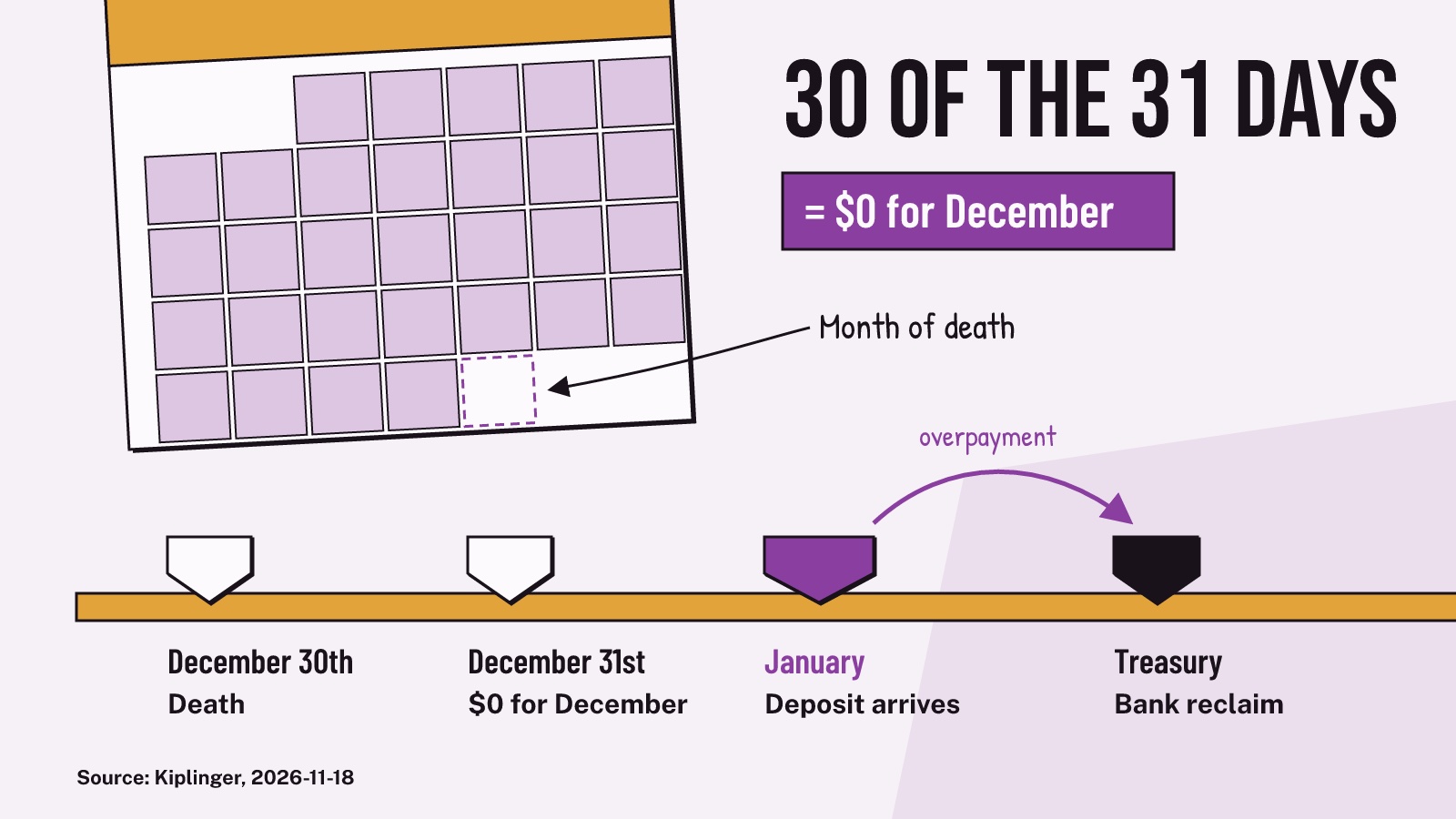
A Social Security deposit that lands after a beneficiary dies is often not the family's to keep. Kiplinger laid out on 2026-11-18 how the government reclaims that money and what happens when it has already been spent. This article explains the rule, how collection works, and the steps that protect heirs and executors from fees and personal liability.
What Kiplinger described
According to Kiplinger, the Social Security Administration (SSA) only pays a monthly benefit for a month the beneficiary lived through from start to finish. There is no partial credit. A person who dies on December 30th has lived 30 of the 31 days, yet is treated as entitled to $0 for December. Even a death at 11:59 PM on December 31st means the December benefit must be repaid in full.
The confusion comes from timing. Benefits are paid one month behind, so the deposit that arrives in January is the payment for December. To a grieving family it looks like a last installment. Under the rule, it is an overpayment: money the government paid but the beneficiary was not owed.
How the money is taken back
Most families never write a refund check. Once a death is reported, usually by relatives or the funeral home, the SSA tells the U.S. Treasury. The Treasury then sends an automatic reclaim order to the bank, which pulls the deposit back out of the account.
Paper checks follow a stricter line. Kiplinger notes that a check arriving after the date of death may not be cashed or deposited, even by the executor. It should go back to the SSA uncashed.
Problems start when the money is gone before the reclaim arrives. If heirs spend it, or scheduled bills drain the account, the SSA issues a formal Overpayment Notice. The bank reclaim can still go through, pushing the account into overdraft and leaving fees the estate must pay. Balances that cannot be recovered from the bank can be sent to the Treasury offset program, which can take future state or federal income tax refunds owed to the estate or co-obligors.
The SSA can also hold back monthly survivor benefits paid on the deceased spouse's record, or part or all of the lump-sum death payment. It cannot touch benefits a survivor earned on their own work record. Interest is generally not added during normal processing if the family cooperates. Cases that are ignored and sent to the Department of Justice or to court can pick up statutory fees and penalty charges.
Why executors carry real risk
An executor is the person who settles a dead person's estate: gathering assets, paying debts and handing what is left to heirs. Banks commonly freeze an account once they learn of a death or receive a Treasury reclamation order, and some may freeze joint accounts too. For property or brokerage holdings, the SSA does not freeze assets directly. Instead it files a priority creditor claim in probate, which Kiplinger describes as a last resort rather than a first step.
That priority matters. Under the Federal Priority Statute, 31 U.S.C. § 3713, a Social Security overpayment ranks ahead of ordinary estate payouts. Only reasonable funeral costs, reasonable administration and executor fees, and debts with valid perfected liens come first. An executor who pays heirs, or settles credit cards and personal loans, before the SSA claim is satisfied can be made to cover that debt personally.
How to protect yourself
The habit this rule teaches is simple: treat any government deposit after a death as money held for someone else until the account is settled. Kiplinger's guidance points the same way, and it is the core of the checks below.
- Report the death to the SSA and the bank quickly, and ask the bank to return deposits for the month of death or later.
- Do not cash or deposit a paper check that arrives after the date of death; return it uncashed to a local SSA field office.
- Pause automatic bill payments from the account so a reclaim does not cause an overdraft and fees.
- As executor, list the federal claim first and wait to pay heirs or general debts until it is settled.
What happens next
Government checks on payments to the dead are also changing. A law called Ending Improper Payments to Deceased People Act was signed in February 2026 after clearing Congress. It lets Treasury use the Social Security Full Death Master File on a permanent basis. On July 21, 2026, Treasury and its Bureau of the Fiscal Service said a new government-wide payment verification process was in place, tied to Executive Order 14249.
If payments still keep coming after a death, Kiplinger advises contacting the SSA quickly and not spending the money in the hope of returning it later. Money that sits untouched is easy to give back. Money that has been spent can turn into overdraft fees, a seized tax refund or, for an executor, a personal debt.
Sources
- Kiplinger, 18 Nov 2026
An AI model drafted this from the official notices and reports listed above. It was published automatically after software checks on figures and wording, without a human edit. It describes rules and protective habits; it is not personal financial advice.